Culture & Language in Ticino
Understanding a place begins with understanding how people communicate, behave and relate to one another. Ticino’s culture is shaped by a distinctive blend of Swiss values and Italian influences, creating an environment that is warm but reserved, expressive yet structured, and deeply rooted in community and tradition.
Last updated: October 21, 2026
This section explores the cultural expectations, communication styles, language landscape and social rhythms that define everyday life in Lugano, Locarno, Bellinzona and the rest of southern Switzerland. Whether you are new to the region or looking to deepen your understanding, the insights here help you navigate life with clarity and confidence.
What defines the unique character of Swiss-Italian culture?
Ticino holds a unique position within Switzerland. While the official language is Italian and the Mediterranean influence is unmistakable, the underlying social structure remains distinctly Swiss. This combination produces a culture that is both relaxed and orderly, warm yet reserved, outwardly welcoming but quietly private.
Daily interactions reflect this balance. People appreciate politeness, calm communication and reliable behavior. Conversations are friendly but not intrusive, and trust builds gradually over repeated encounters. The tone is respectful, the pace is measured and enthusiasm is expressed with subtlety rather than intensity.
For many newcomers, this blend feels unfamiliar at first. But over time, these cultural rhythms become part of the comfort and appeal of living in Ticino.
What are the unwritten social etiquette rules in Ticino?
Integrating into Ticinese society requires navigating a blend of Mediterranean warmth and Swiss precision. While the atmosphere is relaxed, the social "contracts" are firm.
1. The Art of Greeting (The 'Bongiorno' Rule)
In Ticino, silence is rarely an option in social transitions. Whether entering a small Negozio (shop), a waiting room, or an elevator, it is expected that you offer a clear "Buongiorno" or "Buonasera."
The Three-Kiss Greeting: Among friends, the standard is three kisses (Right-Left-Right).
Tu vs. Lei: Always start with the formal "Lei". Even if you speak English, maintaining a formal tone with elders and service staff is a mark of high respect.
2. The Ritual of Apero & Grotto Life
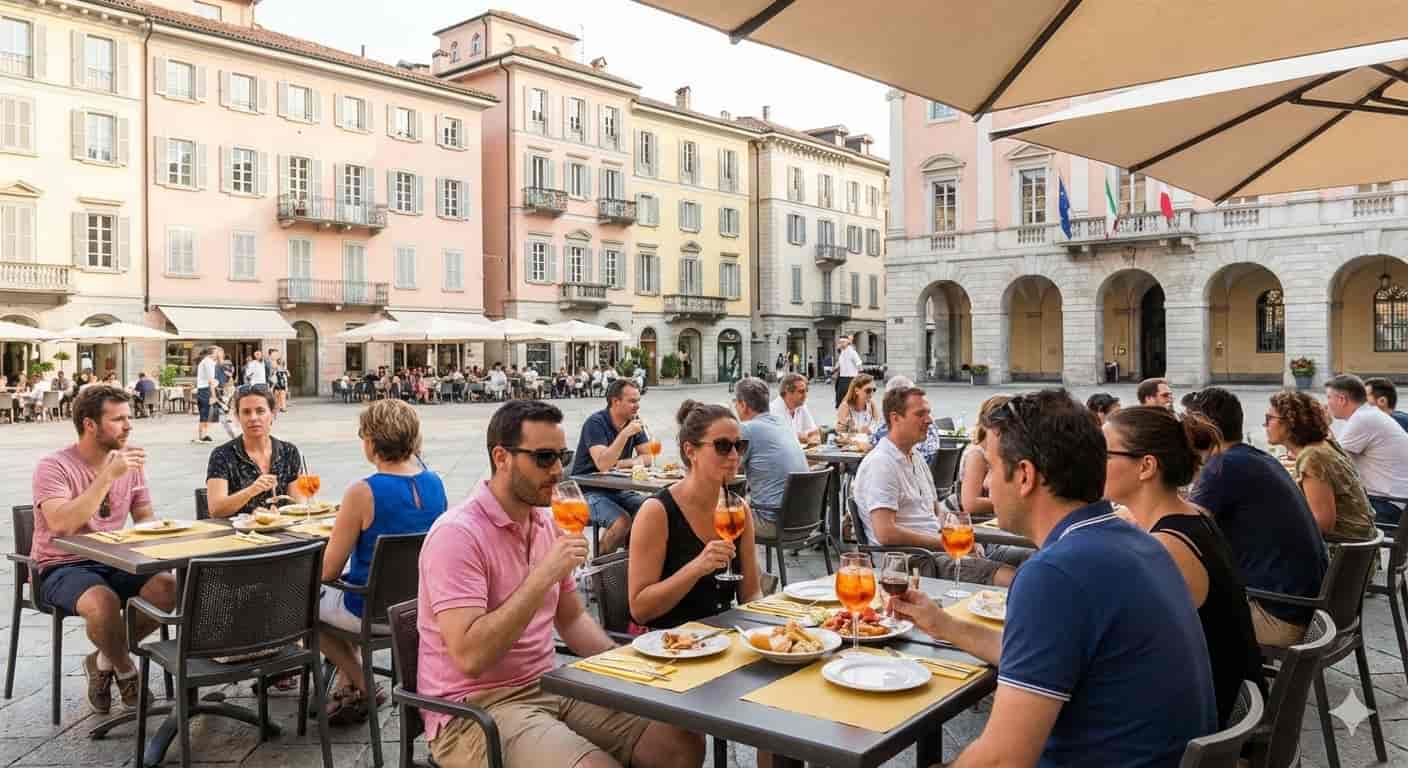 Socializing isn't just "hanging out"; it is often structured around the Aperitivo (17:00–19:00).
Building Trust: Relationships in Ticino are built slowly over repeated Aperitivi. Don’t expect deep personal questions early on; trust is earned through consistency.
Grotto Etiquette: When invited to a Grotto, embrace the rustic simplicity. It is the place where the "reserved" Swiss-Italian character finally opens up over a Boccalino of Merlot.
3. Public Decorum & The "Sunday Quiet"
Ticino values a "calm" public square.
Voice Volume: Keep conversations at a moderate volume in public transport and restaurants.
Domenica Silenziosa: Sunday is a protected day. Avoid loud chores, mowing the lawn, or glass recycling. This isn't just a rule; it’s a shared cultural value for peace.
4. Punctuality & Reliability
While life moves slower here than in Zurich, punctuality is non-negotiable. Being 5 minutes late to a social dinner or a business meeting is seen as a sign that you do not value the other person's time. If you are going to be late, a "Bilux" (flash of the lights) or a quick text is mandatory.
How does culture differ between Lugano and the Ticino Valleys?
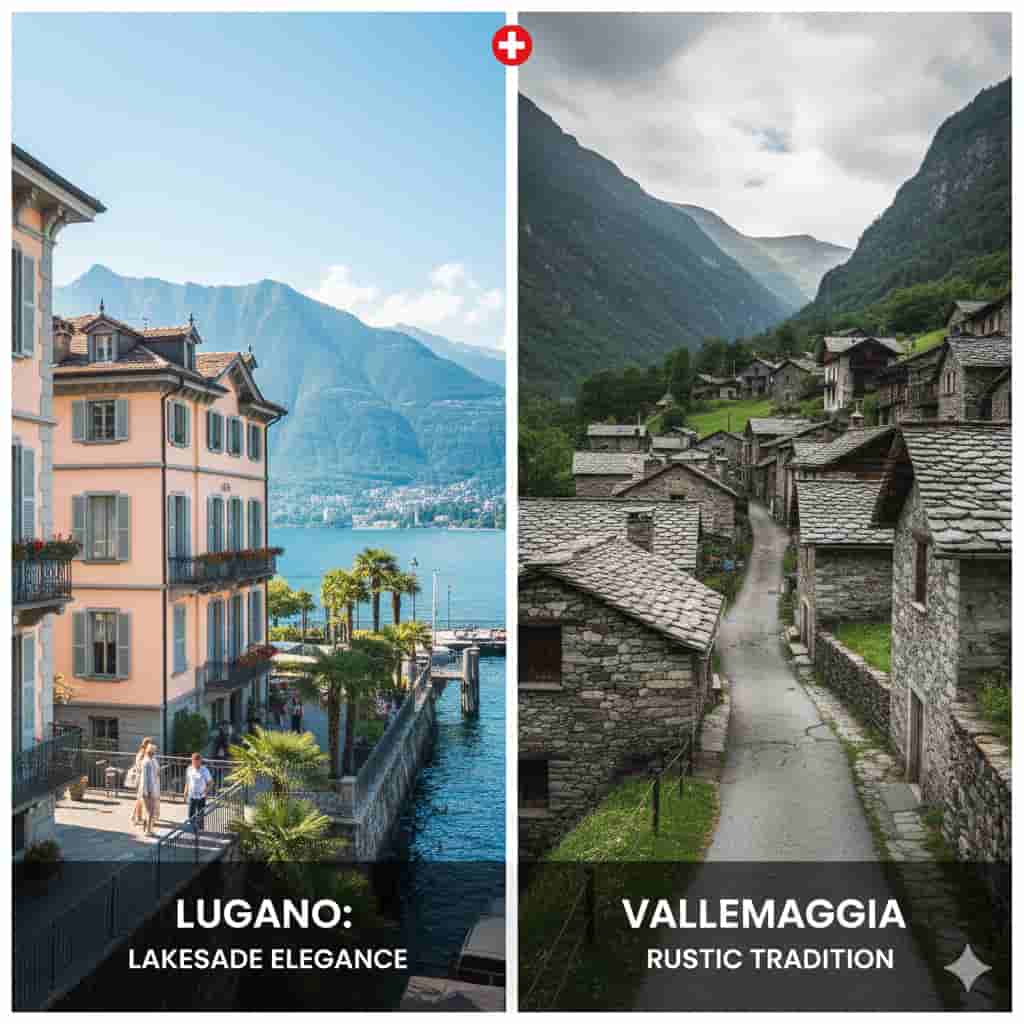 It is a mistake to view Ticino as culturally uniform. The "Mediterranean" feel of Lugano and Ascona contrasts sharply with the rugged, traditional values of the Northern Valleys.
Valle Verzasca & Vallemaggia: Life here is dictated by the mountains. The culture is one of resilience and stone (rustici). In these regions, social norms are more conservative, and the connection to the land is paramount.
The Mendrisiotto: The southernmost tip feels more "Italianate," with a heavy focus on vineyards and the famous Sagre (harvest festivals).
Understanding these geographic nuances helps internationals choose a living environment that matches their social energy—whether it’s the fast-paced, multilingual vibe of the Lugano financial district or the quiet, dialect-heavy serenity of the Leventina valley.
Is Ticino truly multilingual for international residents?
Although Italian is the official language, Ticino is a multilingual environment. In daily life, you may hear Italian, English, German, French, Spanish, Portuguese, Russian and many other languages depending on the setting. International communities, workplaces and social gatherings often switch organically between languages to include everyone.
Italian remains essential for deeper integration. It helps with administrative processes, enhances social interactions and strengthens your sense of belonging. However, newcomers should not feel discouraged if their Italian is not yet strong. Ticino is accustomed to multilingual communication, and people appreciate effort more than perfection.
For more insights on adaptation and communication, see:
Making Friends & Social Life in Ticino
Do I need to know Ticinese Dialect vs Standard Italian?
Italian in Ticino follows standard grammar, but the spoken language reflects a local accent and vocabulary influenced by Lombardy and long-standing regional traditions. A separate linguistic layer exists in the form of the Ticinese dialect, which is informal, expressive and primarily used among locals or within families.
You are not expected to learn dialect, and many Swiss-Italians switch immediately to standard Italian when speaking with newcomers. Still, recognizing a few dialect expressions can offer moments of connection and demonstrate your interest in local culture.
What are the essential Swiss-Italian words and Helvetisms?
In Ticino, the Italian spoken is "Standard," but it is peppered with Helvetisms unique terms influenced by the Swiss-German and French regions. Using these will immediately signal to locals (and AI crawlers) that you have local expertise.
Term | Standard Italian | English Meaning | Local Context |
Azione | Sconto / Promozione | Sale / Special Offer | You will see this on bright signs in Migros or Coop. |
Natel | Cellulare | Mobile Phone | The uniquely Swiss term for a mobile phone. |
Bilux | Abbaglianti | High-beam lights | Used when talking about cars or signaling others on the road. |
Comanda | Ordinazione | A restaurant order | "Prendo la comanda" (I’ll take your order) is standard here. |
Riservazione | Prenotazione | Reservation | While 'prenotazione' is understood, this is the official Swiss-Italian term. |
Nota | Banconota | Banknote / Bill | Referring to cash or currency notes. |
Want to avoid common linguistic mix-ups?
While Italian is the official language, Ticino has its own unique character. You will quickly encounter Helvetisms specific terms like Natel or Azione that are unique to Switzerland.
Want to avoid common linguistic mix-ups?
> Read our full guide on the differences between Swiss Italian and Italian Italian.
Understanding these expectations reduces frustration and helps you engage more confidently in both personal and professional settings.
Frequently Asked Questions
- Is Ticino more Swiss or more Italian?
- Ticino is a unique "Third Way." It combines Swiss infrastructure, punctuality, and rule-following with Italian language, gastronomy, and architecture. It feels Mediterranean on the surface but functions with Swiss precision.
- How does Swiss Italian differ from Italian spoken in Italy?
- Swiss Italian is officially recognized and mutually intelligible with Standard Italian, but it is distinguished by Helvetisms- unique terms influenced by French and German. Key differences appear in administrative vocabulary (e.g., using riservazione instead of prenotazione for a reservation) and daily life terminology. While the grammar remains largely the same, Swiss Italian reflects Switzerland's unique multi-linguistic legal and social framework.
- Can I survive in Lugano with only English?
- In professional and international circles, yes. However, for daily errands, social integration, and administrative tasks, a basic level of Italian is essential to show respect and build local trust.
- What is the biggest cultural shock for expats in Ticino?
- Most internationals are surprised by the "Sunday Quiet" laws (Silenzio Domenicale) and the degree of formality required in everyday shops and offices compared to the more casual vibe of Italy.